
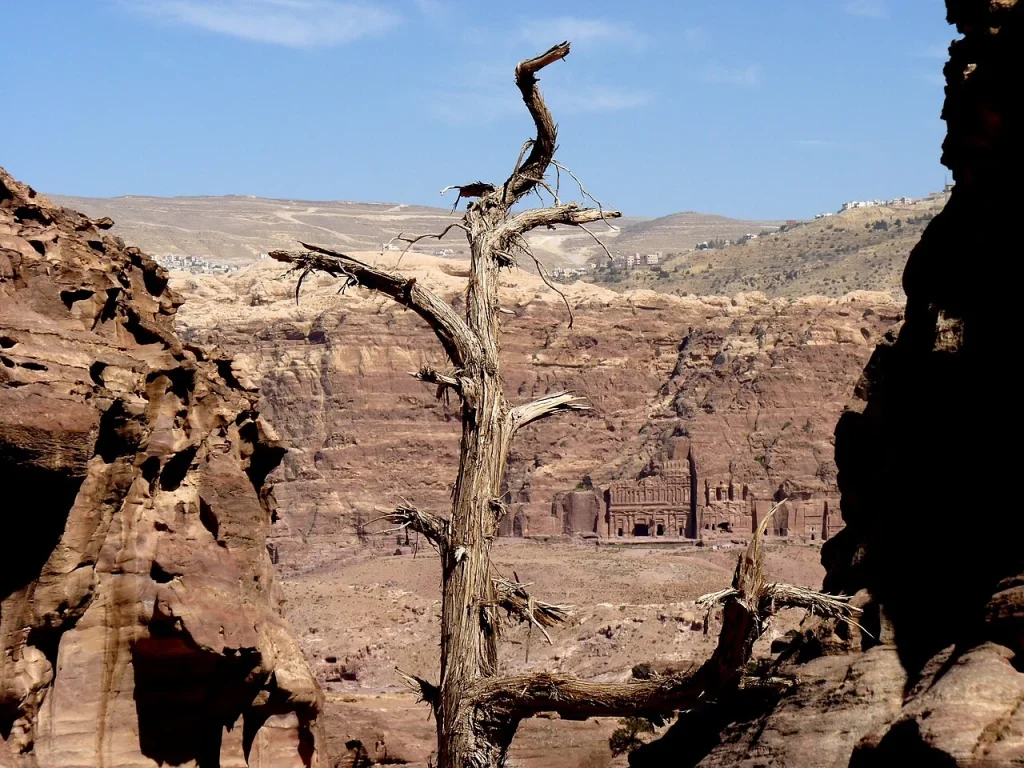

The first clear view of the Treasury can easily become the defining image of a Petra visit. Give it its moment, then ask a wider question: how did this place work as a city? A facade tells you something about patronage, craft and display. The spaces between monuments can reveal another scale of life.
UNESCO’s Petra account identifies a Nabataean trading centre set within an extensive sandstone landscape. Its significance includes both rock-cut and constructed architecture, together with the infrastructure that collected, moved and stored water. This offers a useful reading frame for your visit: landscape, buildings and practical systems belong together.
Compare a facade with a gathering place
The Royal Tombs sit on the western face of Khubtha Mountain, overlooking the ancient centre. The official interpretation names the Urn, Silk, Corinthian and Palace tombs and explains their prominent placement. Look first at the relationship between the cliff and the carved frontage. Then consider what changes when a monument is seen from across the valley rather than close beneath it.
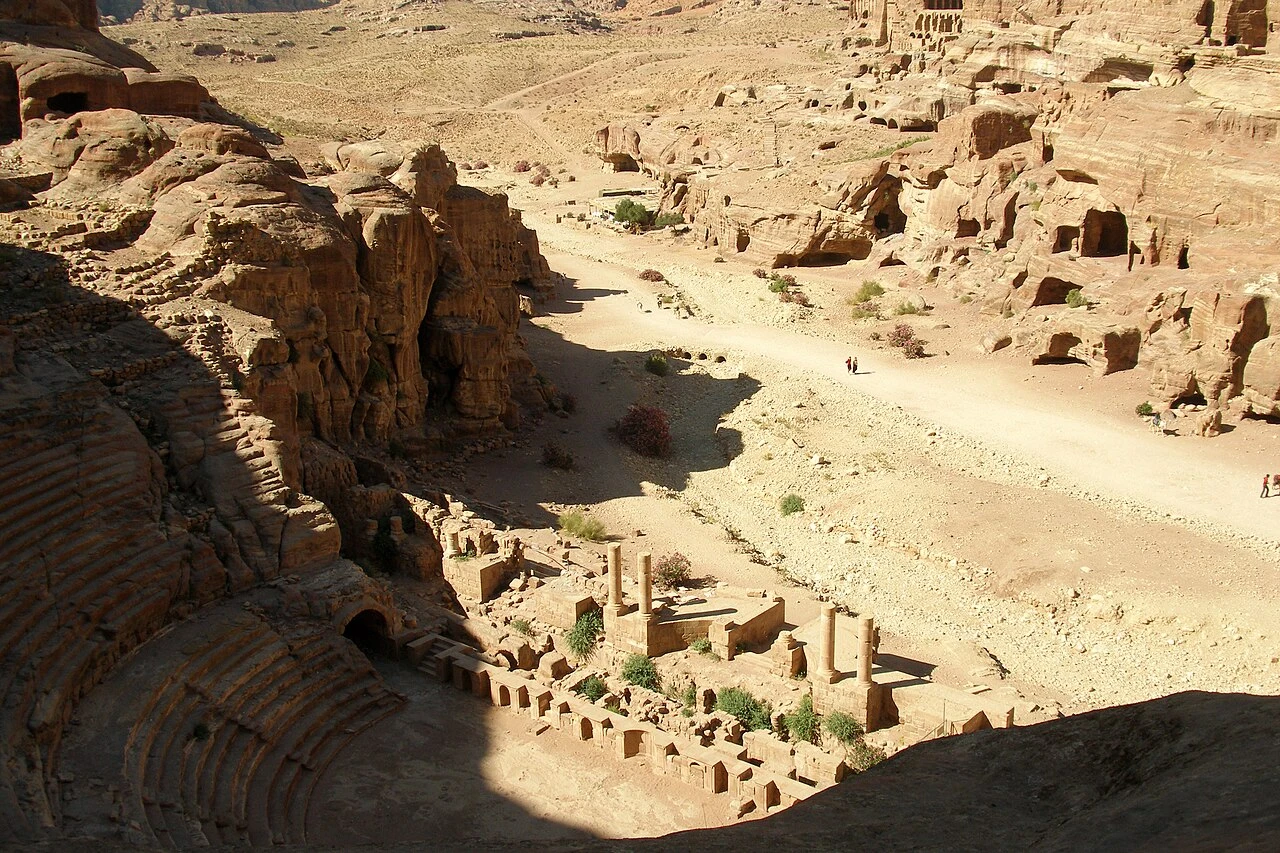
The theater offers a different kind of space. Its seating is cut into the rock, while a stage wall belongs to later Roman work. The official theater account leaves some questions about its original events open. That uncertainty is useful: architecture can support interpretation without proving every story told about it.

Make room for built structures
Rock-cut fronts are visually immediate. Courtyards, foundations and columns ask for a slower look. At the complex conventionally called the Great Temple, Visit Petra describes courtyards, colonnades, stairs and a small theater; it discusses civic uses rather than assuming the name fully explains the function. Names are convenient labels, but archaeology can complicate them.
You do not need to remember every date to make a meaningful comparison. Choose two spaces with different purposes and write down what you can actually see. Separate that observation from what a sign, guide or source suggests. “Rows of seats carved into rock” is an observation; a claim about a particular performance needs evidence.
Three questions to carry
- What was carved from the cliff, and what was built from separate blocks?
- Where does the surrounding landscape help explain the placement of a structure?
- Which parts of the interpretation are secure, and which remain proposals?
A licensed local guide can help connect these questions to details you would otherwise miss. Ask about the evidence behind an explanation and the work of excavation or conservation. An informed conversation is more useful than a rapid list of impressive names.
Choose depth before distance
For a first visit, a few well-understood places may be more rewarding than a long catalogue of stops. Leave time to look back across the archaeological area and connect the pieces. If you are comparing organized visits, check how much of the programme is spent inside Petra and which places are actually named. A photograph of a monument does not establish that it is part of the route.
Our photographs show documented earlier views. Follow current site instructions and choose permitted paths; a visible staircase or open space in an old image is not evidence of present access.