
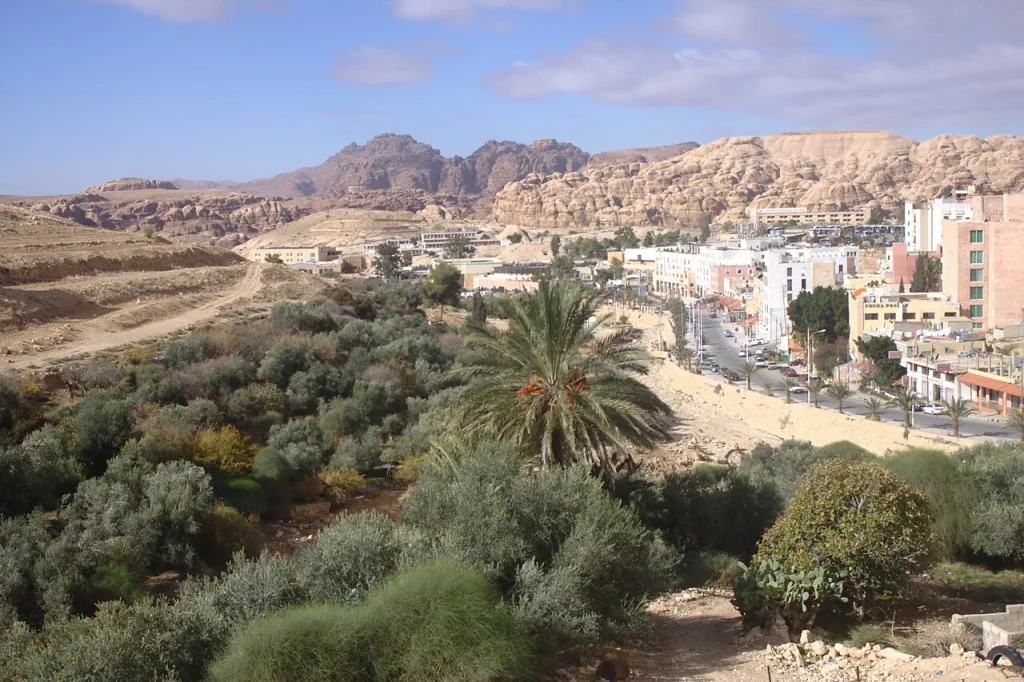

Wadi Musa is often introduced through its usefulness for visiting Petra. That is only one way to understand it. It is also a present-day town where people live, work, meet and make decisions unrelated to a visitor’s itinerary. Giving it time means more than filling the evening between two archaeological visits.
The authority’s local communities account identifies Wadi Musa as the centre of Petra District and places it among several distinct communities in the region. Those names should not be flattened into one generic idea of “the locals.” When discussing a business, guide or experience, use the person’s or place’s actual name.
Choose a base by the journey you will make
A room described as near Petra may be convenient for one traveller and awkward for another. Compare the exact address with the visitor centre, your arrival transport and the places you expect to use in town. A short line on a map does not tell you how a walk feels after a long day or with luggage.
Ask the accommodation about the practical details that matter to you: the route from your arrival point, any steps or gradients, an agreed transfer and the arrangements for an early departure. Describe your needs specifically. “Can I reach the entrance without stairs?” is easier to answer than “Is it convenient?”
Leave a little unassigned time
Do not schedule every meal and conversation as a performance of local culture. A useful evening might be a simple meal, time to read your notes or a conversation with a guide about the following day. Choose an activity because you understand what is being offered, who is hosting it and how payment works.
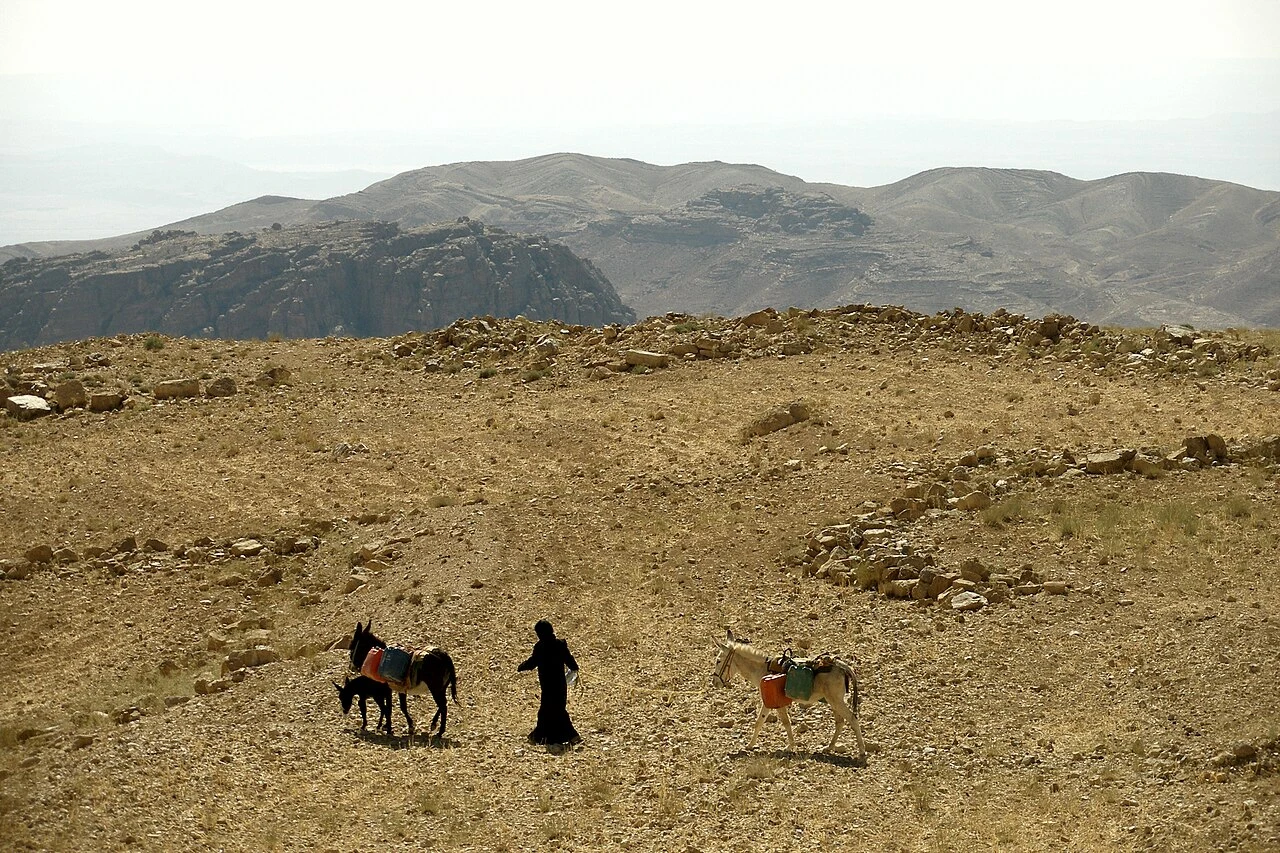

The rural photograph above records an earlier Wadi Musa landscape. It does not identify a bookable farm visit or grant permission to enter cultivated land. A terrace, courtyard or field seen from a public place may still be someone’s working or private space.
Ask questions that give people agency
- For a craft purchase, ask who made it and where the work takes place.
- For a food experience, ask the host what participation involves and explain dietary needs in advance.
- Before a portrait or a photograph inside a business, ask whether it is welcome.
- Agree the price and scope of a service before it begins.
These are practical habits rather than a promise that every encounter will unfold in the same way. A person may be busy, uninterested in a photograph or unwilling to discuss their work. Respecting that answer is part of treating a town as a lived place.
Connect tourism with ordinary choices
The Petra Five Promises was developed through consultations across the region’s communities. Its visitor guidance includes local products, fair transactions and attention to everyday life. You can apply that approach in modest ways: learn a maker’s name, take time over a service you value and avoid treating a low price as the only measure of a good choice.
This guide does not claim relationships with named hosts or endorse an unverified workshop. Our tour comparisons are separate provider listings. Read the specific description and ask who delivers an experience before booking. A Petra photograph beside an offer is not a guarantee of a particular community visit.
For the archaeological part of the trip, use the visit-planning guide to connect your base, route and return arrangements.