
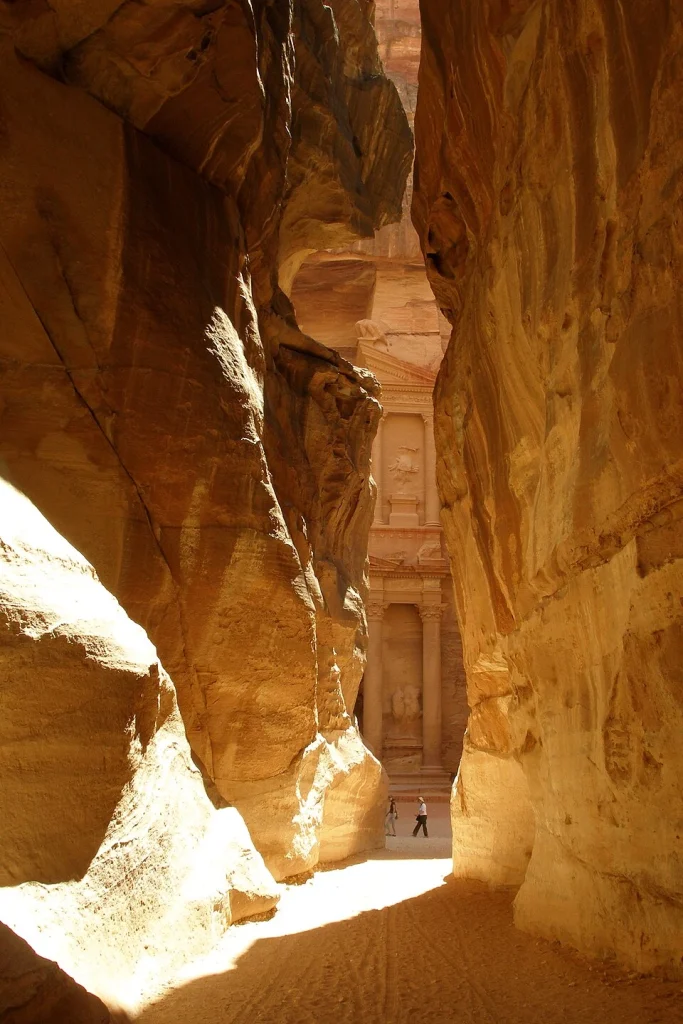

The Siq is an approach to Petra and a place worth understanding in its own right. A photograph can make it look like a single opening between two walls. On the ground, the interest lies in a sequence of bends, changes of light and small details beside the path. Plan to notice that sequence rather than treating it as a corridor to get through.
The official Siq interpretation describes a natural gorge, with water channels along its sides and surviving traces of earlier paving. The passage was not excavated as a monumental entrance from a solid block of stone. Distinguishing natural formation from human alteration makes the work along its edges easier to appreciate.
A route has a beginning and a return
The official main-trail account runs from the visitor centre in Wadi Musa through the Siq and the Treasury area toward Qasr al-Bint. Its published distance is a one-way measure. A useful personal plan also includes the return journey, time looking at monuments, pauses and any agreed meeting arrangements.
Do not let a short advertised walking time define your day. A route estimate is not the same as your pace, nor does it include every pause you may want. Before leaving the visitor centre, establish which parts of your intended route are currently open and when you need to be back. If a transfer is part of your booking, keep its meeting point separate from your archaeological itinerary.
Look to the sides as well as ahead
A quick way to change your attention is to alternate between three distances. Look at the larger passage, the rock beside you and the line of the path. You may notice that a small engineered feature explains more about everyday provision than a dramatic distant view.
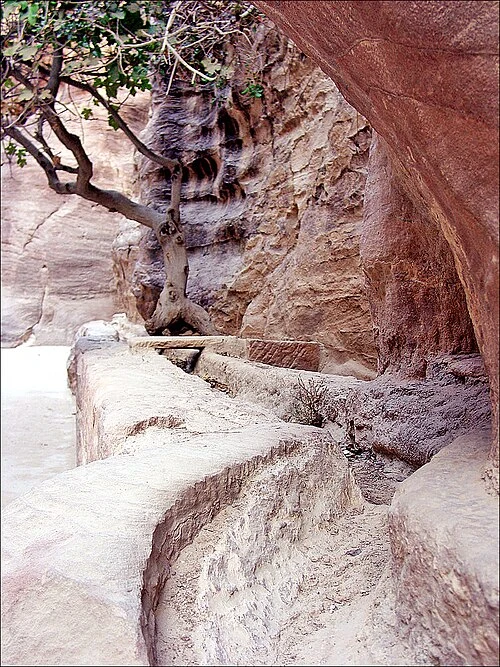

The channel photograph above is a dated detail, not a route marker. Use it as a prompt to ask how water was managed, without touching fragile surfaces or stepping outside the permitted walkway. Our water and stone guide develops that question.
Make photographs without blocking the passage
Choose a place where stopping leaves room for other people. A wide view with visitors in it can communicate scale more honestly than an image made to suggest an empty site. For a close portrait, ask first and accept a refusal without negotiation. People working, walking or guiding here are not part of a staged archaeological scene.
Consider taking one photograph of the whole passage and another of a small detail, then spending some time simply looking. Different light does not make one view the definitive version of Petra. The credited images in this guide retain their original weather, date and natural colour.
Know what your guide arrangement covers
- Ask where the guided portion begins and ends.
- Check whether the return walk is guided or independent.
- Clarify any additional route, transport or entrance arrangements before agreeing to them.
- Use the visitor centre for current route and licensed-service information.
The authority’s visitor tips are the starting point for conduct and preparation. A general guide cannot establish current access or the suitability of a route for an individual visitor. If stairs, uneven ground or distance affect your choices, describe those needs when requesting specific arrangements.